NDÈYÈ
“I can imagine no heroism greater than motherhood”-
Lance Conrad
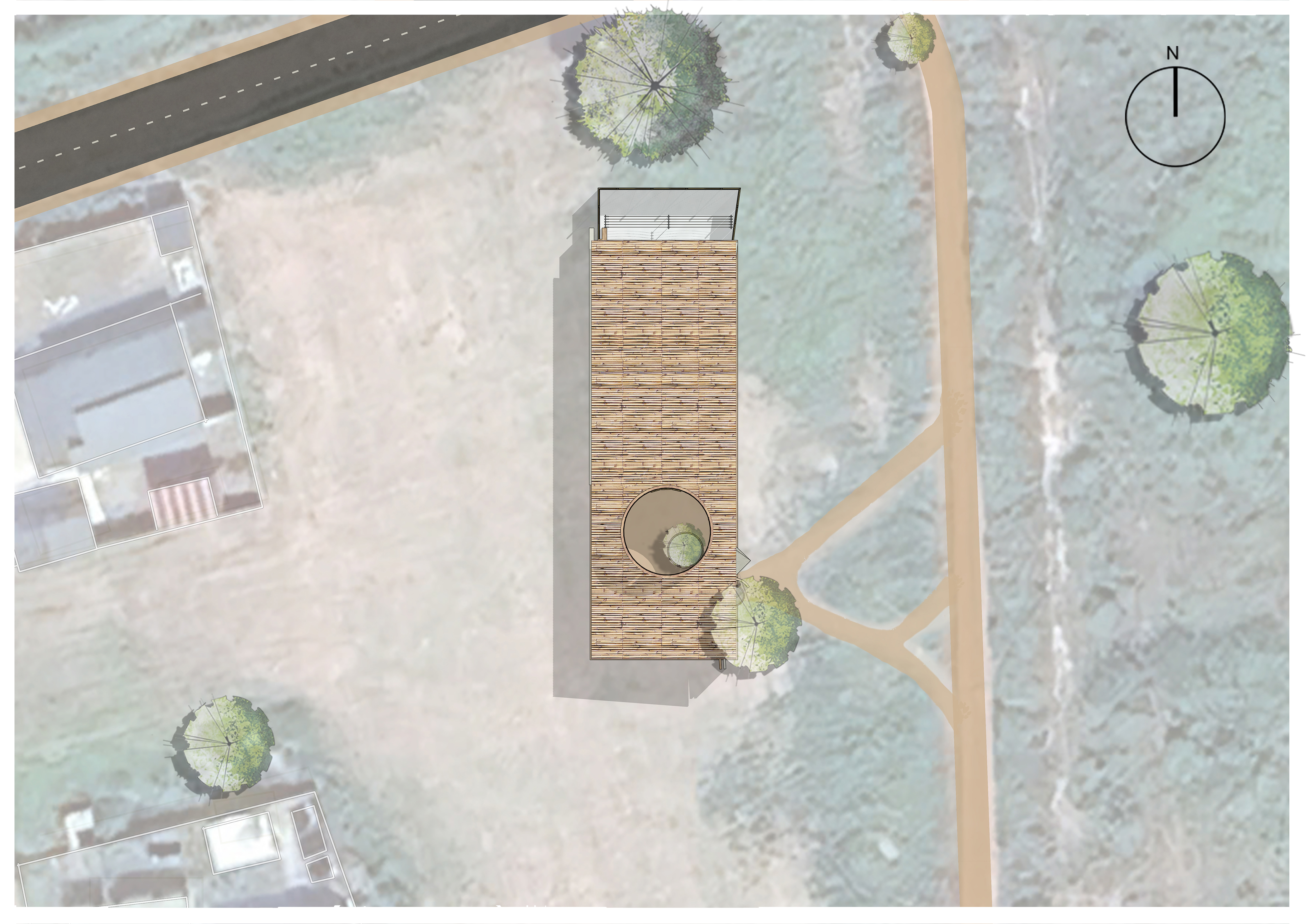
Just as a mother opens up herself to welcome life and newness into the world, Ndèyè represents and celebrates the essence of Mothering. Ndèyè, means “Mother” in Wollof. This design derives its concept from the process of “Mothering”- a sense of comfort, a sense of safety and a sense of home. We call this design Ndèyè
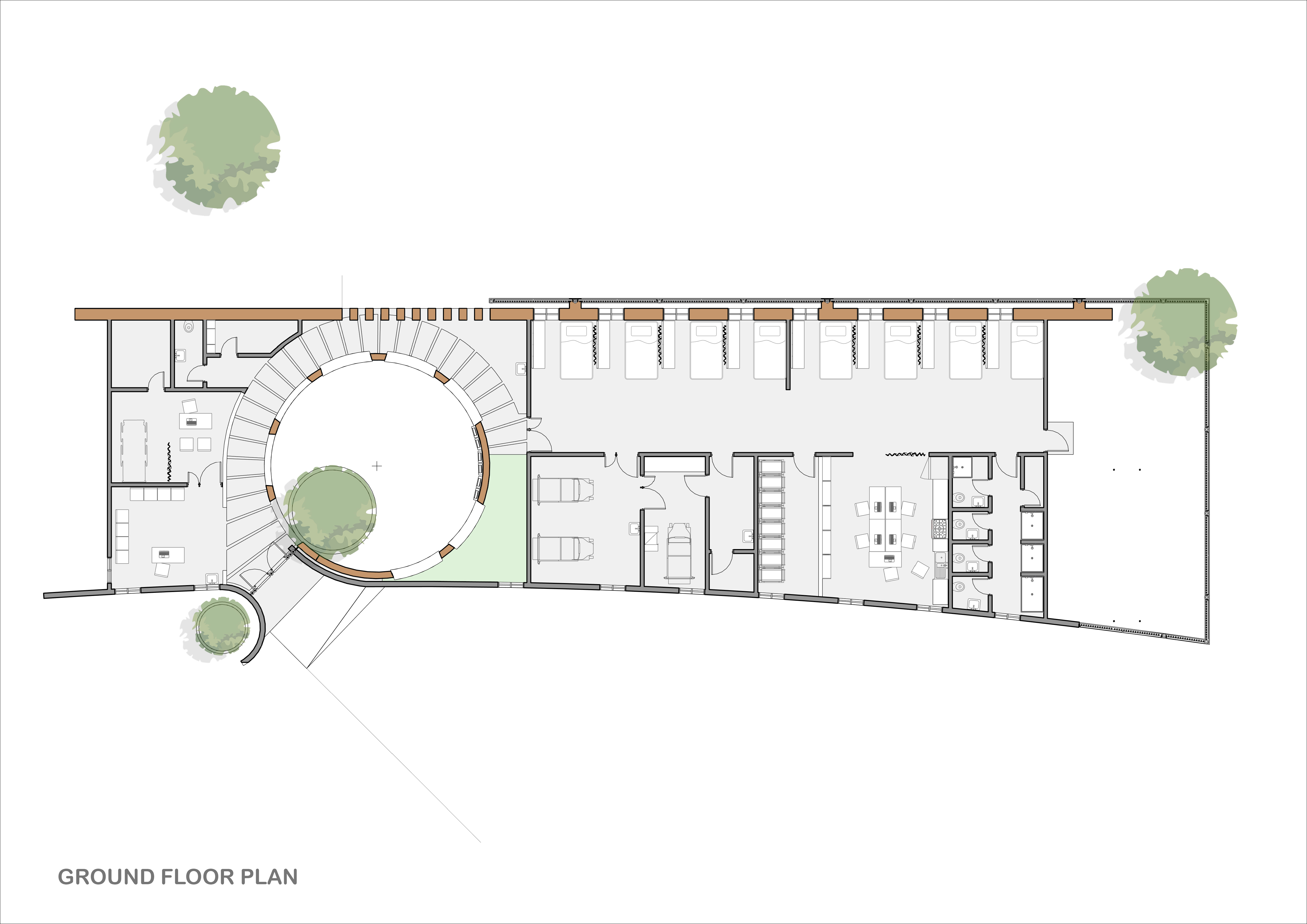
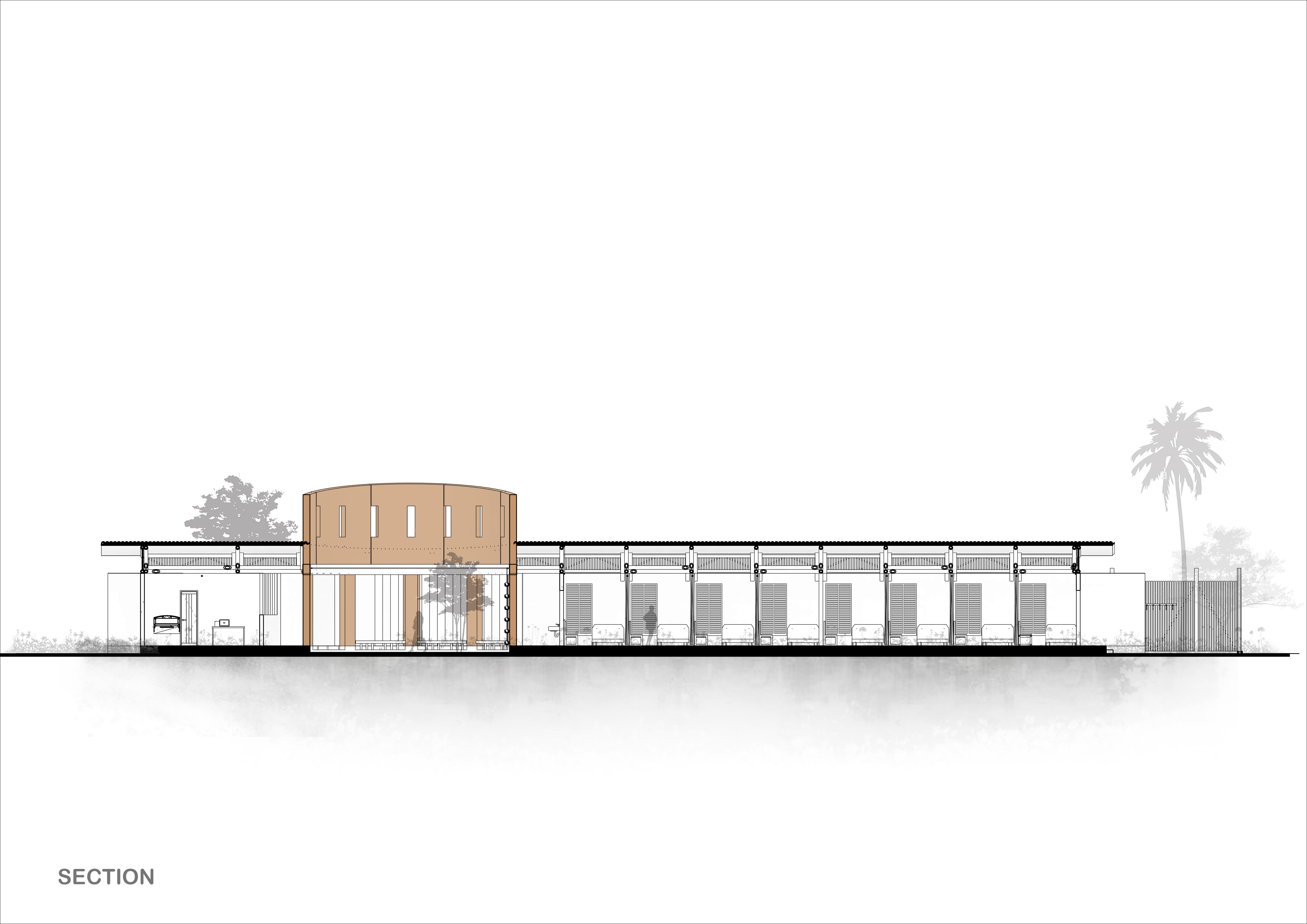
“Ndeye” features a longitudinal home for birth. The word home is used because this design is in many ways in its intent a second home for would-be mothers. It avoids the sterility of a typical hospital space and instead employs traditional tools to reflect the comfort of home, enabling expectant mothers settle calmly in readiness for their birthing. With easily navigable spaces- distributed around a central atrium . Ndèyè is safe, open and honest.
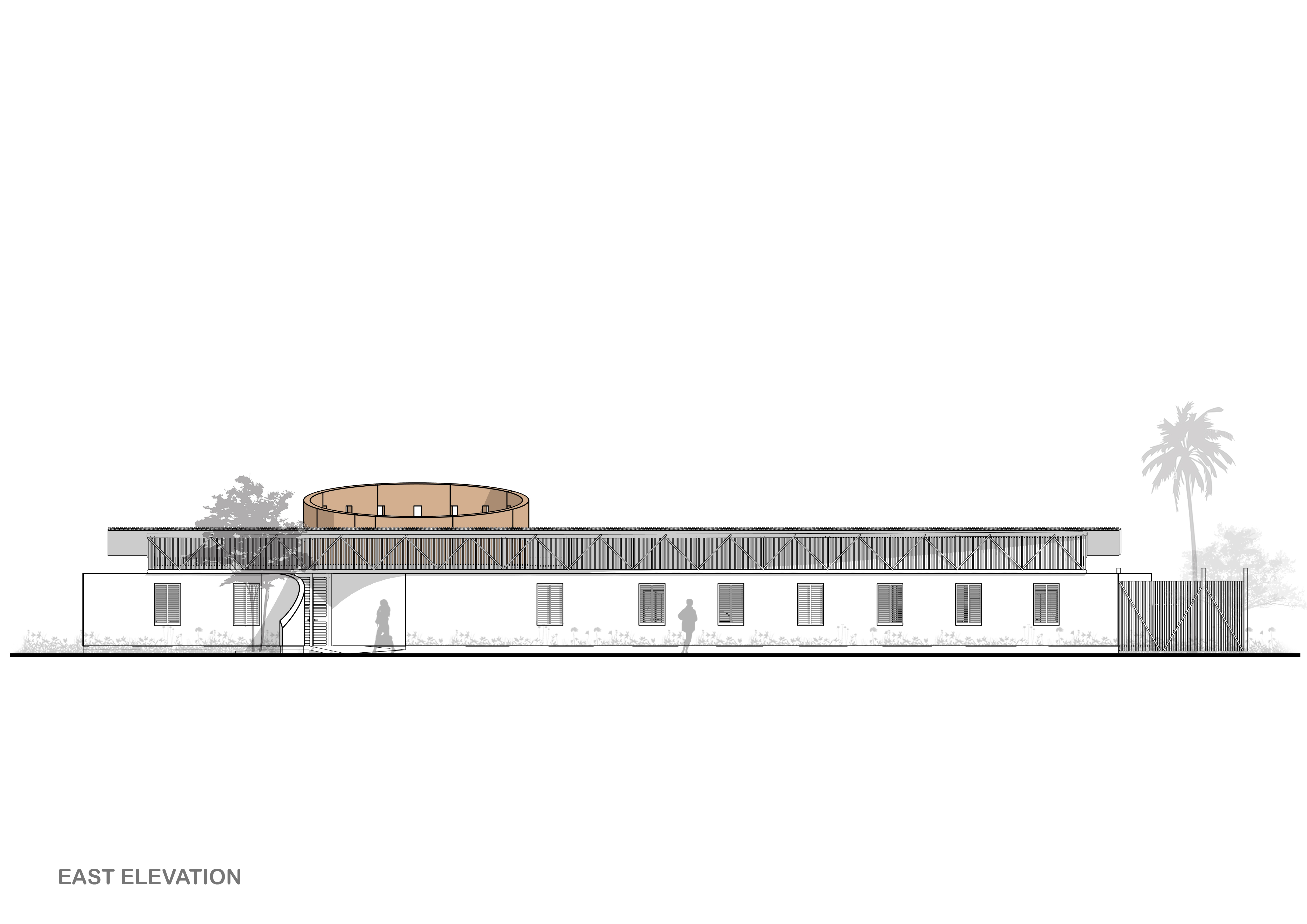
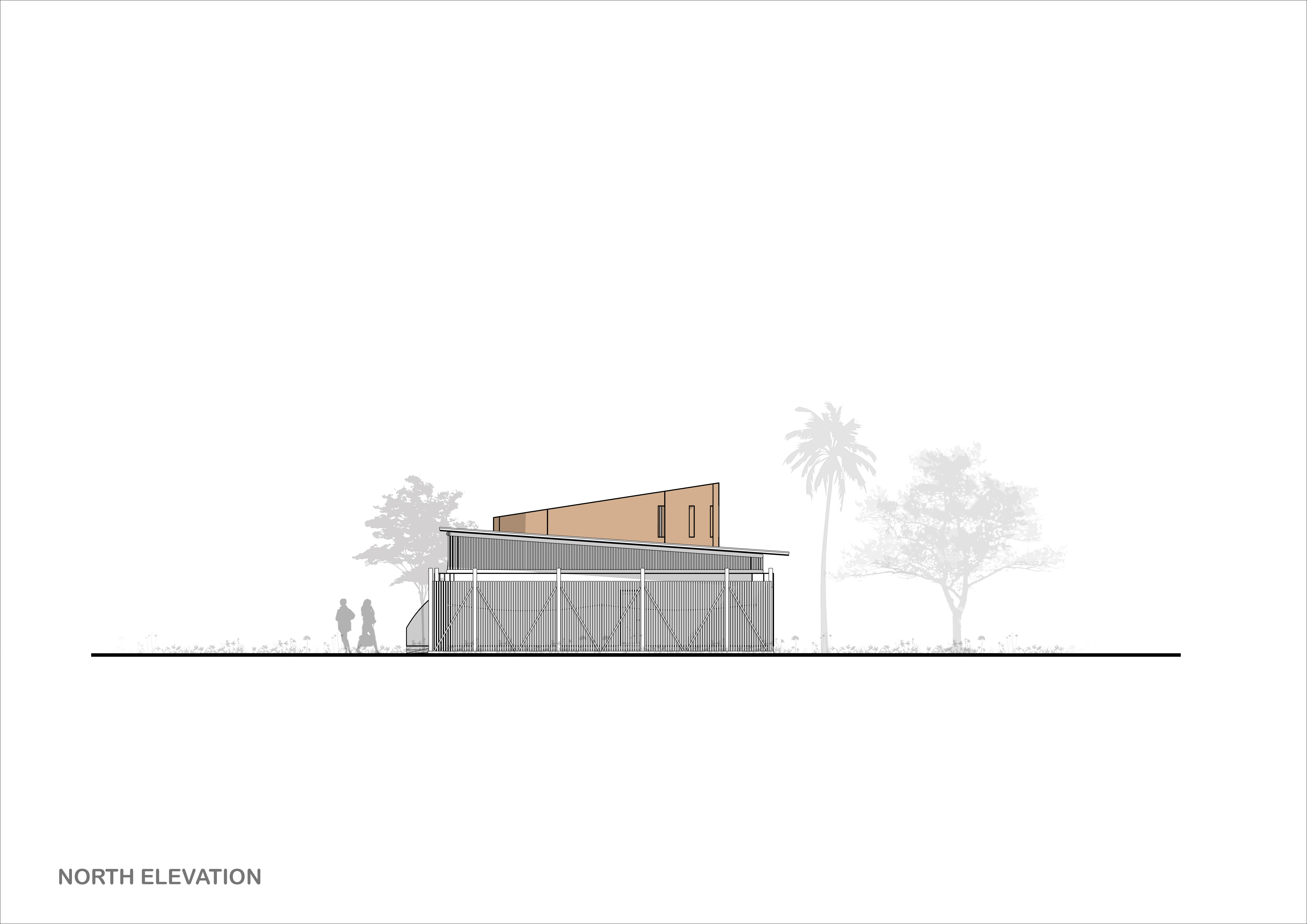
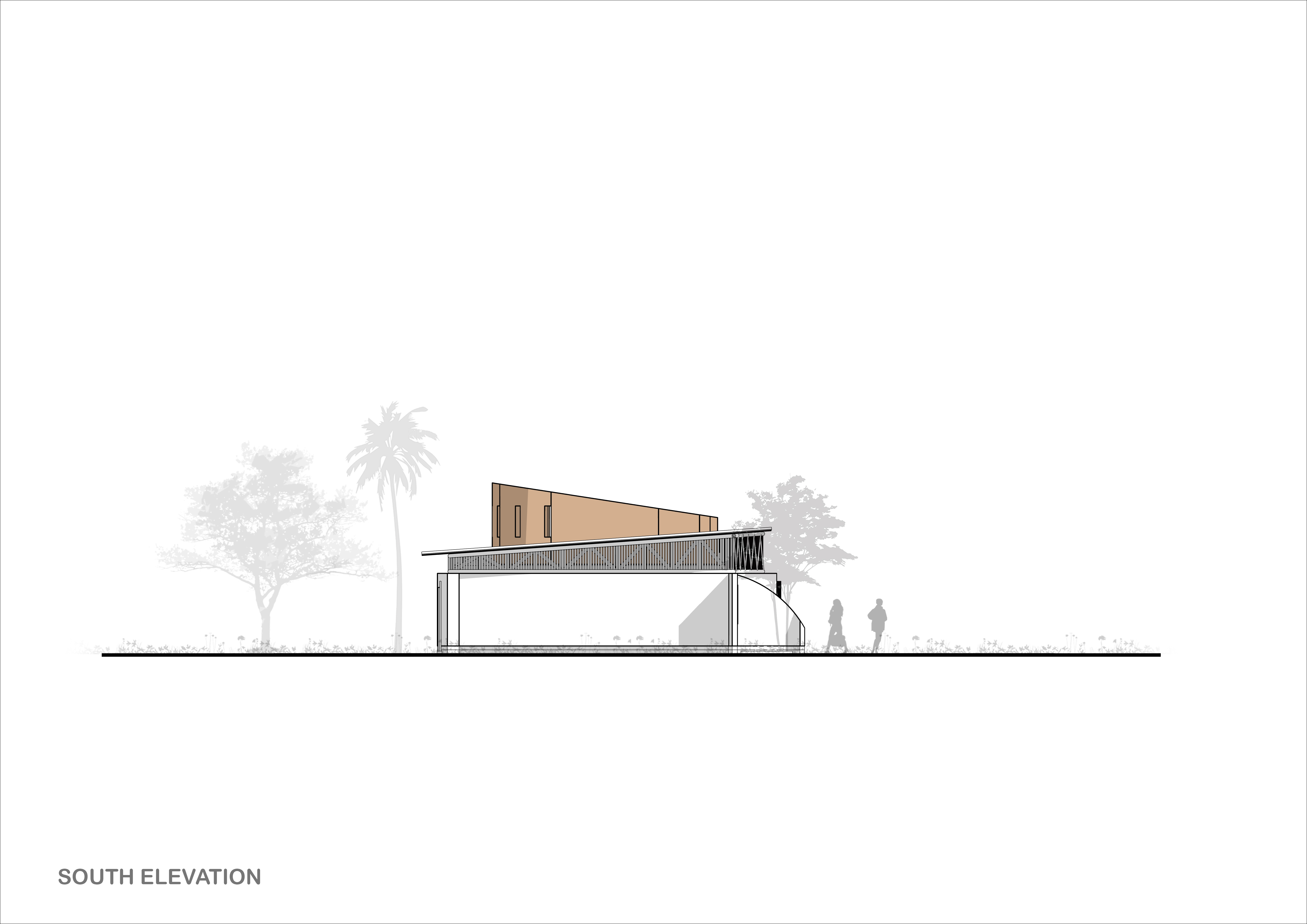
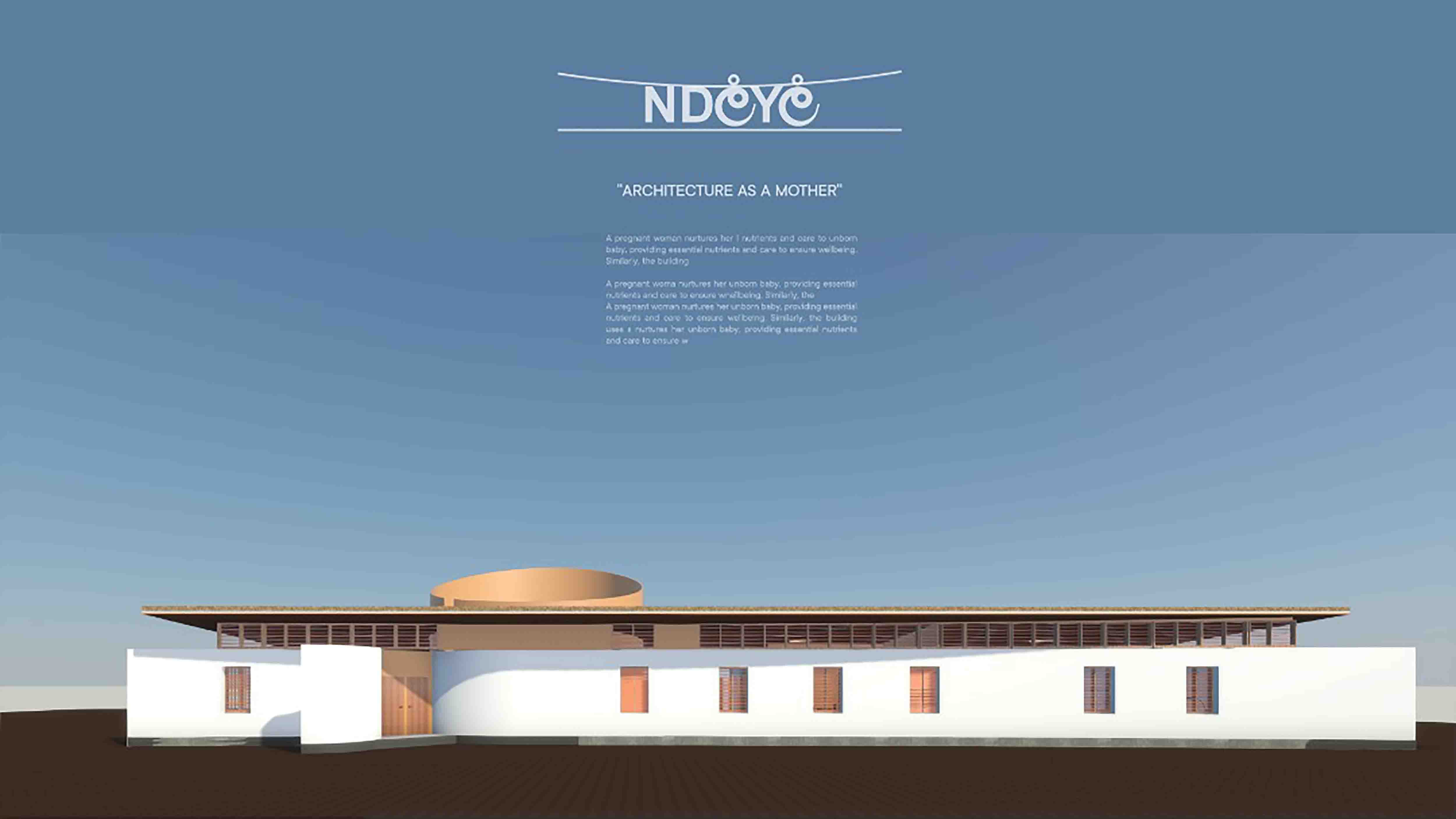
The Eastern Elevation wall elected to harbour the entrance ,warmly embraces patients by gently bending inwards before peeling back to make way and form the entry to welcome women and their families. The long western wall on the other hand
The choice of a celebratory clean white wall with a line of elevated fenestration, allows the free flow of air through the space(filtered through a bamboo mesh to keep out mosquitoes etc). White reflects away strong rays of sunshine and is culturally representative of victory and celebration in West Africa
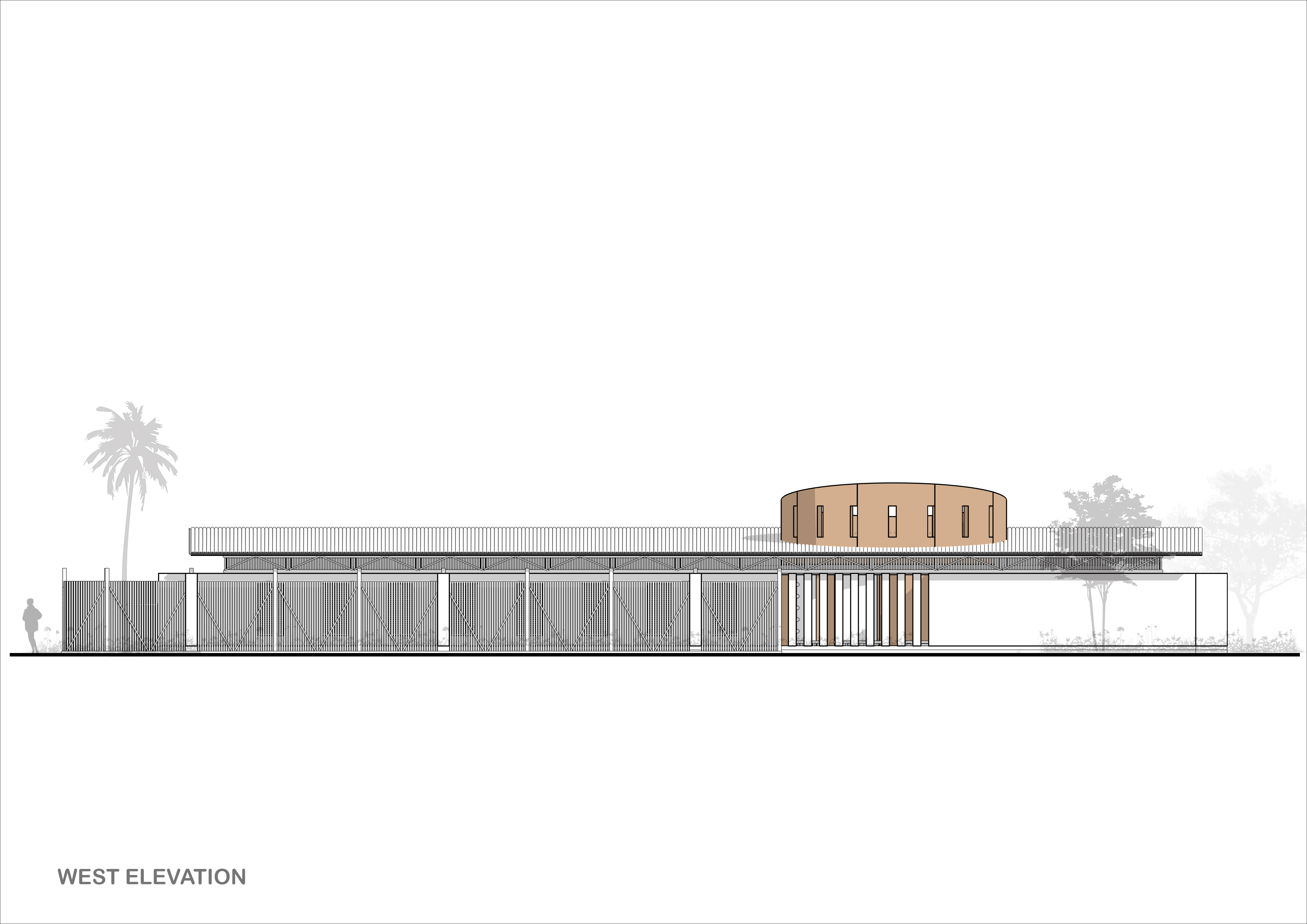
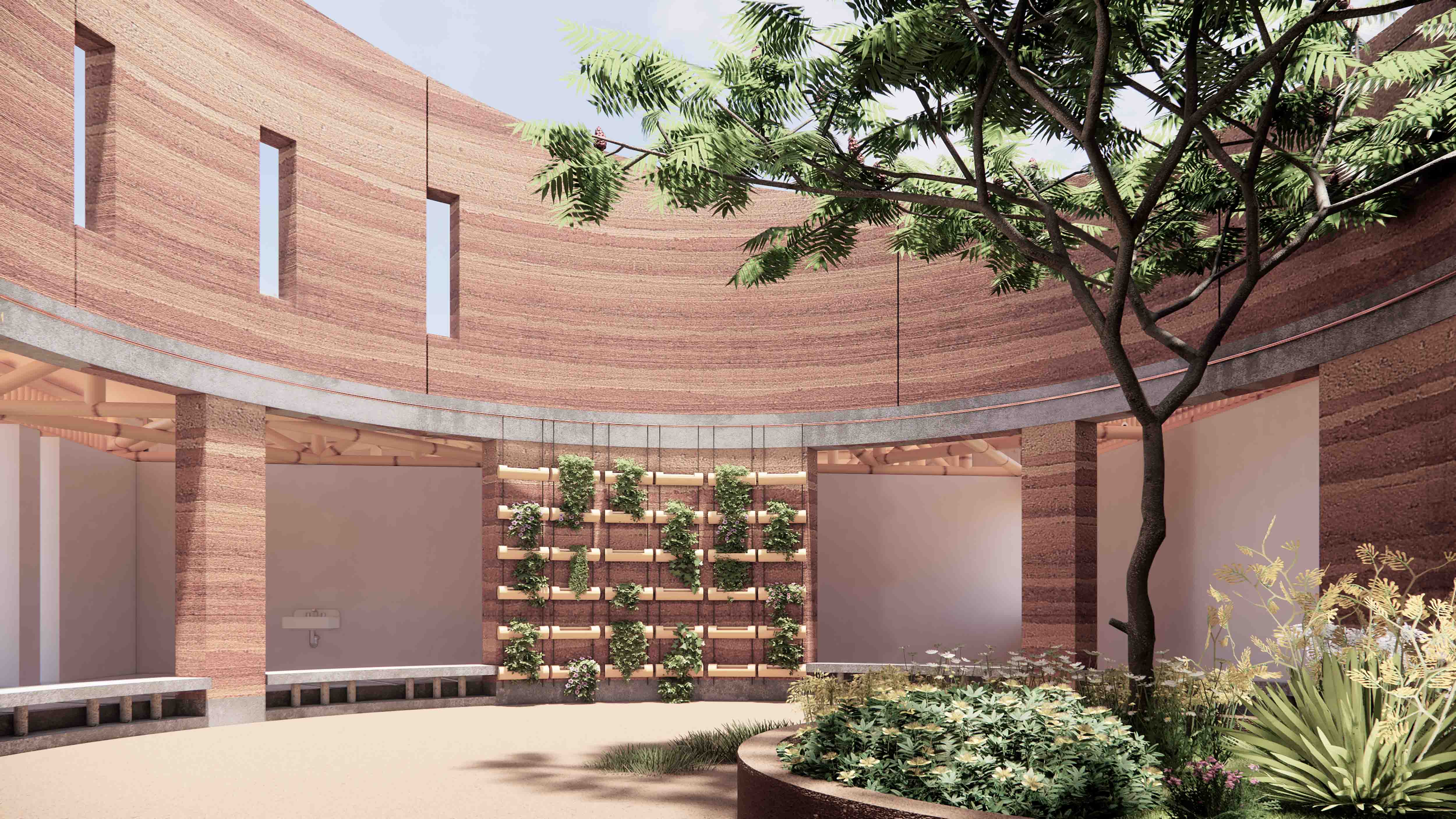
features the essential amenities; along with a central courtyard-the womb- an area for rest, recuperation and gathering. This indoor-outdoor space allows mothers to have access to the outside(and fresh air) even when the main entrance is closed off. A circular atrium, this region is the project rotule and meeting point of family and friends as they wait anxiously for the mothers , soon to be born children and babies. The planting and foliage in this zone is calming and refreshing- with plants such as citronella and oregano to repel any mosquitoes and insects.
FORM
Simplicity and play on simple geometries- the rectangle, the circle, the triangle
The design of Ndèyè employs the simple and essential geometries of the circle, the triangle and the rectangle; predominant shapes in (Western)African culture and art, celebrating them through design and harmonizing them in the same way birthing is collaborative, generative and communal.
To the North wing of the central atrium lies the wards and the natal clinic for childbirth and surgery where applicable. This zone is clearly separate for medical operations and houses wards for women and spaces for the medical staff.
Landscaping- the natural-use of planting etc
Planting is representative and reminiscent of life, and is employed mainly in the inner courtyard area both to introduce freshness and to reflect the newness of life. Just as growth is healing, the vegetative spaces will provide visual interest and well as to new mothers and guests alike.
MATERIAL USE
Celebration of materiality
Ndeye is simple in its material interplay and hones local, durable materials in the production of its form.
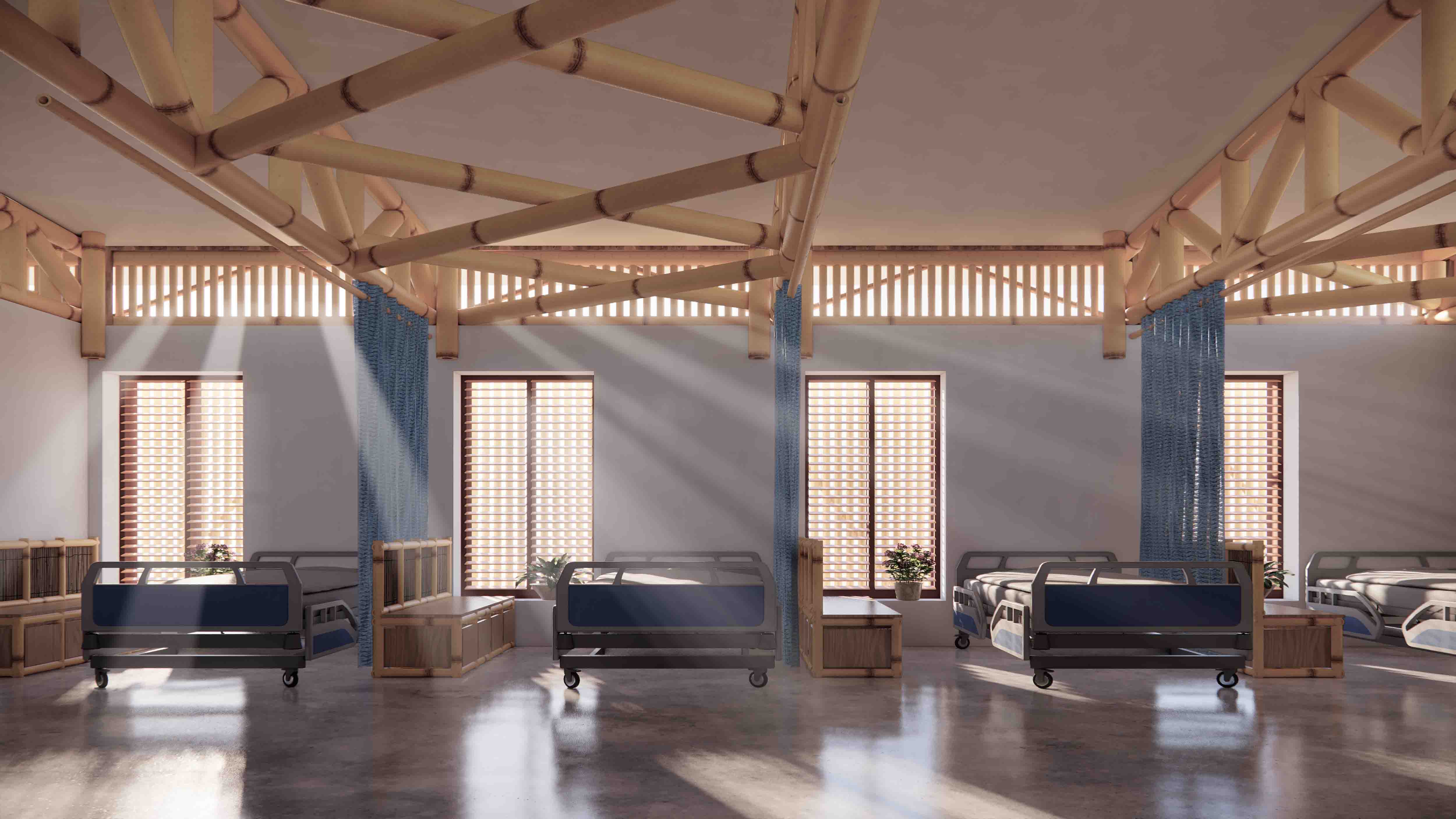
The structure sits on a concrete base with adobe blocks and compressed earth walls. The painted white Eastern wall strikes a contrast against the Earthy warmth of the Adobe and bamboo window framing. One of the standout features of Ndeye is its roof, which is constructed using bamboo, a material abundant in the region and renowned for its durability and cost-effectiveness. The individual bamboo members are arranged in an interlocking pattern, creating a structurally sound and visually appealing canopy. This intricate arrangement is supported by a layer of felt and plywood, ensuring optimal insulation and weather resistance.
The structure generally employs typical materials- sand, bamboo and wood* locally sourced and employs them both as structural elements and moments of visual interest- demonstrated for exemplarily in the use of bamboo beams in the ward spaces that function both as roof support and exposed scaffolding*
The structural material of the roof is bamboo, plentiful in the region and harnessed for use due to its durability and economical properties. Individual members are arranged in an interlocking pattern, positioned atop a layer of felt, which sits atop a layer of plywood.
The west wall receives an unforgiving dose of sunshine, and this is ameliorated by a stack of vertical bamboo members stabilized by diagonal lines of the same This innovative design not only provides effective passive cooling but also showcases the versatility and functionality of bamboo as a building material.
In the Spirit of sustainability and simplicity, these same materials are reused in the internal spaces, with the bamboo shoots employed as exposed beams and compressed Earth kept untouched for visual appeal.
Construction processes are simple, such that specialized skilled labor is not required and therefore, construction costs are lessened.
ASSEMBLY
The hospital project will be built on a Earth and strip foundation, providing a sturdy and durable base for the structure with a polished concrete finish on the floor . The concrete will be poured and cured according to industry standards, ensuring optimal strength and stability.
The exterior walls exist in 2 typologies- 400mm compressed earth walls and plastered cement block walls. The compressed earth walls will be formed using a mixture of soil, water, and a stabilizing agent, compacted into a dense and durable material.
Coming up along with walls are wooden layers windows- the lower level and the upper level- with the lower level ones consisting of fanlight frames synthesized from bamboo along with anti-insect netting, and then, on the higher level, wooden windows with net frames- all modular in size.
The structural material of the roof is cleaved bamboo stems, plentiful in the region and harnessed for use due to its durability and economical properties. This sits atop a layer of roofing felt. Supporting this sheeting is a series of bamboo trusses, arranged in an interlocking pattern through laced and nailing- carrying the weight of the roof..
Client: Little Hands
Design lead: Arc. Kofi Essel-Appiah,
Project Architects: Jacob Twum Asare |
Stephen Melormey |
Jean-Marc Moncho |
Ewuraba Essel-Appiah
Location: Casamance, Senegal
Built area 57 sq.m
Project Status: Concept competition Drawings
`